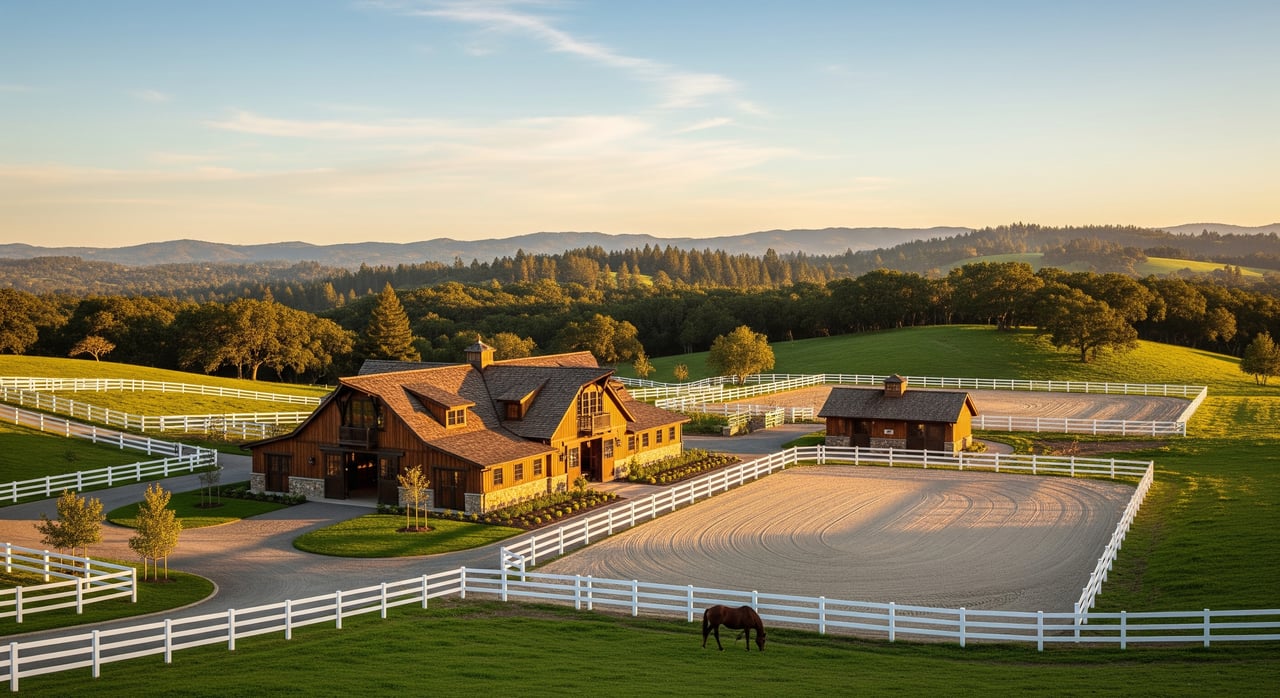
If you picture your morning starting with a quiet ride from your own barn to miles of local trails, Woodside should be on your shortlist. The town’s semi-rural character, privacy, and long equestrian tradition make it a standout on the Peninsula. But buying a horse-friendly estate here is not the same as buying a typical single-family home. In this guide, you’ll learn how to evaluate land, barns, arenas, water and septic systems, wildfire risk, and the permits that shape what you can build or expand. Let’s dive in.
Woodside and nearby communities were shaped to preserve open space and support horsekeeping. You will find large lots, access to regional trails, and properties designed for barns and turnout. The key is not just acreage, but how much of that land is usable for equestrian needs.
Usable, gently sloped ground is what commands a premium. Turnkey properties with safe fencing, functional arenas, and well-planned barn layouts tend to outperform raw hillside acreage. Proximity to open space, privacy, and service access for vets and farriers all add value.
Before you fall in love with a barn or arena, confirm who regulates the parcel. Depending on the address, you may be under the Town of Woodside or unincorporated San Mateo County. Rules can differ between neighboring properties, so a zoning lookup is a must.
Pro tip: Contact planning staff early in escrow to verify permitted uses, resolve any open code issues, and confirm the permit history of barns and arenas.
If you plan to keep a couple of personal horses, your path is usually simpler. If you intend to board, train, or host events, anticipate additional review for parking, traffic, and operations. Clarify this upfront so your design aligns with the correct permitting track.
Total acres do not tell the whole story. Focus on how much flat or gently sloped land you can dedicate to turnout, paddocks, and an arena. Steep ground drives up grading costs and reduces usable space.
Long driveways and gates are common. Verify emergency vehicle access, turnaround areas, and surface standards. Good access matters for safety, deliveries, and trailer maneuvering.
Water is a top priority. Many Peninsula estates use private wells, sometimes alongside municipal water. Evaluate well yield, depth, pump capacity, and redundancy for dry months, especially if you plan to irrigate an arena or landscaping. For barns with bathrooms or wash racks, confirm septic capacity and permit records with the appropriate county office.
Electrical needs can be significant. Indoor arenas, lighting, pumps, and heated tack rooms may require upgraded service. Ask your contractor and utility provider about the feasibility of three-phase power if needed for equipment.
Well-designed barns support horse comfort and daily workflow. During inspections, look closely at:
Arena functionality hinges on the sub-base and drainage. A standard outdoor dressage footprint is often 20 x 60 meters, but your use may call for different dimensions. Footing choices like sand, sand-fiber, or rubber blends have different maintenance and water needs. Plan for perimeter drains and an irrigation or dust-control strategy.
Fencing should balance safety, durability, and upkeep. Post-and-rail, pipe, high-tensile, and electric top strands are common. Confirm any restrictions on barbed wire, fence height, and visibility near driveways. On sloped paddocks, budget for erosion protection and surfacing to protect soil and hooves.
Manure management is central to health and neighbor relations. A dedicated composting or storage area should minimize runoff and odors and be kept clear of wells and waterways. Feed storage needs to be dry and secure for both safety and pest control.
Consider how vets, farriers, and feed deliveries will access the site. Many buyers also plan for an isolation stall or small quarantine paddock for new or ill horses. These details improve day-to-day operations and protect your horses’ health.
For water reliability, request a recent well yield report and water quality tests. If you plan to add bathrooms or a wash rack, verify septic permit capacity and leach field condition before committing to upgrades.
Woodside’s Mediterranean climate and vegetation create meaningful wildfire exposure. Many properties fall within state or local hazard designations. Insurers increasingly expect defensible space, fuel reduction, and ember-resistant construction around homes and barns. Hay storage is a particular concern, so plan for safe siting and ventilation.
Creeks and riparian areas are common on Peninsula parcels. Work near waterways usually requires permits. Floodplain status can influence where you place barns and arenas and may affect insurance. Some parcels near conserved open space support sensitive species; grading or significant ground disturbance can trigger biological review.
Conservation easements from regional organizations help protect open space. These easements can affect fencing, vegetation removal, or even allow public trail corridors across or adjacent to private land. Understand these conditions early so privacy and access match your expectations.
Buyers here pay for functionality. Usable acreage, permitted infrastructure, water reliability, and safe, well-built barns tend to outperform raw land on steep terrain. Turnkey fencing, drainage, and arena footing reduce your time to ride and add immediate value.
Trail access, privacy, and proximity to equine services also influence price and livability. When comparing properties across Woodside, Portola Valley, and Los Altos Hills, look at cost per usable acre. A smaller, well-laid-out parcel with paddocks and an arena can be worth more than a larger hillside holding with limited flat ground.
Use this checklist to structure your investigation and avoid surprises:
Jurisdiction and zoning
Title and easements
Permit history and code status
Utilities and services
Structural and site inspections
Environmental and hazards
Operations and access
Insurance and lending
Wildfire evacuation planning is non-negotiable. Ensure you have safe trailer access, multiple egress routes if possible, and a prearranged list of evacuation sites. Keep halters, paperwork, and a load plan ready. Many owners also maintain defensible space around barns and hay storage as part of their annual routine.
Buying an equestrian property blends land-use strategy with horse-savvy design. You want clear guidance on zoning, permits, and inspections, plus a trusted network of engineers, contractors, and equine professionals. As a long-time Peninsula advisor based in Woodside, Stephanie coordinates the details, anticipates local constraints, and helps you focus on what adds real value.
If you are exploring horse-friendly estates in Woodside or the surrounding Peninsula, connect for a focused, private conversation about your goals and the best on- and off-market options. Let’s Connect with Stephanie Nash.
Primary phone
(650) 995-3820License Number
#01104524Address
2930 Woodside Rd,About The Author
For more than three decades, Stephanie Nash has been one of the Peninsula’s most trusted and proven real estate advisors, serving Woodside, Portola Valley, Atherton, Redwood City, Emerald Hills, San Carlos, Half Moon Bay, and the surrounding communities from Burlingame to Los Gatos.
Born and raised on the Peninsula, Stephanie brings true insider knowledge of the region; its micro-neighborhoods, school corridors, country-property enclaves, and the lifestyle features that make this area so coveted: sunny weather, an easygoing spirit, hiking trails, large-parcel retreats, ocean-view hillsides, and world-class food and culture.
Stephanie began her real estate career in 1987 working in local title companies before becoming the assistant to a top-producing agent. She earned her real estate license in 1991, and since then has built a reputation as a solutions-driven, ethical, and steady negotiator who guides clients through every complexity of a California transaction.
Her track record includes everything from luxury estates to rural acreage to trust and estate sales, including the successful sale of a 500-acre property, a transaction requiring extensive due diligence, jurisdictional navigation, and long-term strategy.
Stephanie has been recognized multiple times by RealTrends as one of the “Best Agents in America,” most recently in 2024; an honor reserved for the top tier of agents nationwide based on verified production.
In addition to client representation, Stephanie now serves as a retained Expert Witness in California real estate cases—including valuation disputes, fiduciary sales, marketing standards, agent performance, disclosure practices, and industry-standard care.
Whether you are buying, selling, downsizing, expanding, or handling a trust/estate sale, Stephanie offers:
Deep regional expertise across multiple Peninsula micro-markets
Strong negotiation skills grounded in fairness, strategy, and consistent communication
Experience in complex transactions (trusts, estates, multiple-heir negotiations, title defects, rural land issues)
Compassionate guidance rooted in decades of hands-on client service
Unmatched availability and responsiveness
Clients praise her listening skills, honesty, and ability to navigate even the most emotional or complicated sale with clarity and professionalism.
Stephanie is deeply grateful for her family, her life on the Peninsula, and the meaningful relationships formed through her work.
Stephanie respects residential real estate’s dual role as a personal investment and chief financial one. Whether you are buying or selling a home, it will likely be one of the largest financial decisions you make. Stephanie will be with you every step of the way to expertly guide you.
Let's ConnectAddress
2930 Woodside Road
Woodside, CA 94062
CA DRE# 01104524