Menu

Leave a Message

By providing your contact information to Stephanie Nash, your personal information will be processed in accordance with Stephanie Nash's Privacy Policy. By checking the box(es) below, you expressly consent to receive marketing or promotional real estate communication from Stephanie Nash in the manner selected by you. For SMS text messages, message frequency varies. Message and data rates may apply. Consent is not a condition of purchase of any goods or services. You may opt out of receiving further communications from Stephanie Nash at any time. To opt out of receiving SMS text messages, reply STOP to unsubscribe. SMS text messaging is subject to our Terms of Use.

Thank you for your message. We will be in touch with you shortly.

Top Things to Look for in San Mateo Open Houses

05/6/26  |  Stephanie Nash

How to Walk Through a Home Like a Buyer Who Knows What Matters.


By Stephanie Nash

San Mateo's real estate market moves quickly, and open houses can feel like a blur — especially when multiple buyers are touring the same property simultaneously. Walking in without a clear framework means you'll leave with impressions but not information. The buyers who make the best decisions here are the ones who know what to look for before they cross the threshold. Here's how to make every San Mateo open house count.

Key Takeaways

  • First impressions are useful but often misleading — trained observation goes well below the surface.
  • San Mateo's housing stock spans multiple eras, each with its own common issues and maintenance considerations.
  • The questions you ask at an open house are as important as what you observe.
  • What you don't see — the disclosure package and permit history — is often more important than what you do.

Start Outside Before You Go In

The exterior tells you more than most buyers realize, and it's the area where staging has the least influence. A thorough walk around the perimeter before entering sets the context for everything you'll observe inside.

What to Evaluate Before Entering the Home

  • Roof condition: Look for missing or curling shingles, visible sagging along the ridge line, or signs of patching that suggest recurring issues
  • Foundation and drainage: Check for cracks, evidence of water pooling near the base, or soil that has settled unevenly against the home
  • Exterior walls and trim: Peeling paint, wood rot, and gaps in caulking around windows and doors indicate deferred maintenance that accumulates into larger problems
  • Garage and driveway: Their condition signals how attentively the property has been maintained over time
In San Mateo, where homes range from 1920s Craftsman bungalows in Hayward Park to mid-century ranchers in Beresford, the exterior concerns vary by era — knowing what to expect for a given age sharpens what you're watching for.

Evaluate Systems and Structural Integrity

The systems that keep a home functioning are where real costs and risks live. Staging can make a home feel beautiful without touching any of them.

Key Systems to Assess at Every Open House

  • Electrical panel: Note the brand and apparent age; Federal Pacific and Zinsco panels found in some older San Mateo homes have known safety concerns that affect both insurability and negotiating position
  • Plumbing: Turn on faucets, note water pressure, and look under sinks for evidence of past or active leaks
  • HVAC: Note the age of the furnace and any air conditioning equipment, and ask when the system was last serviced
  • Floors and walls: Soft spots underfoot, doors that stick, and diagonal cracks from window corners suggest foundation movement worth investigating
None of these findings are automatic deal-breaker, but they should inform your offer strategy and the scope of inspections you commission.

Look Past the Staging

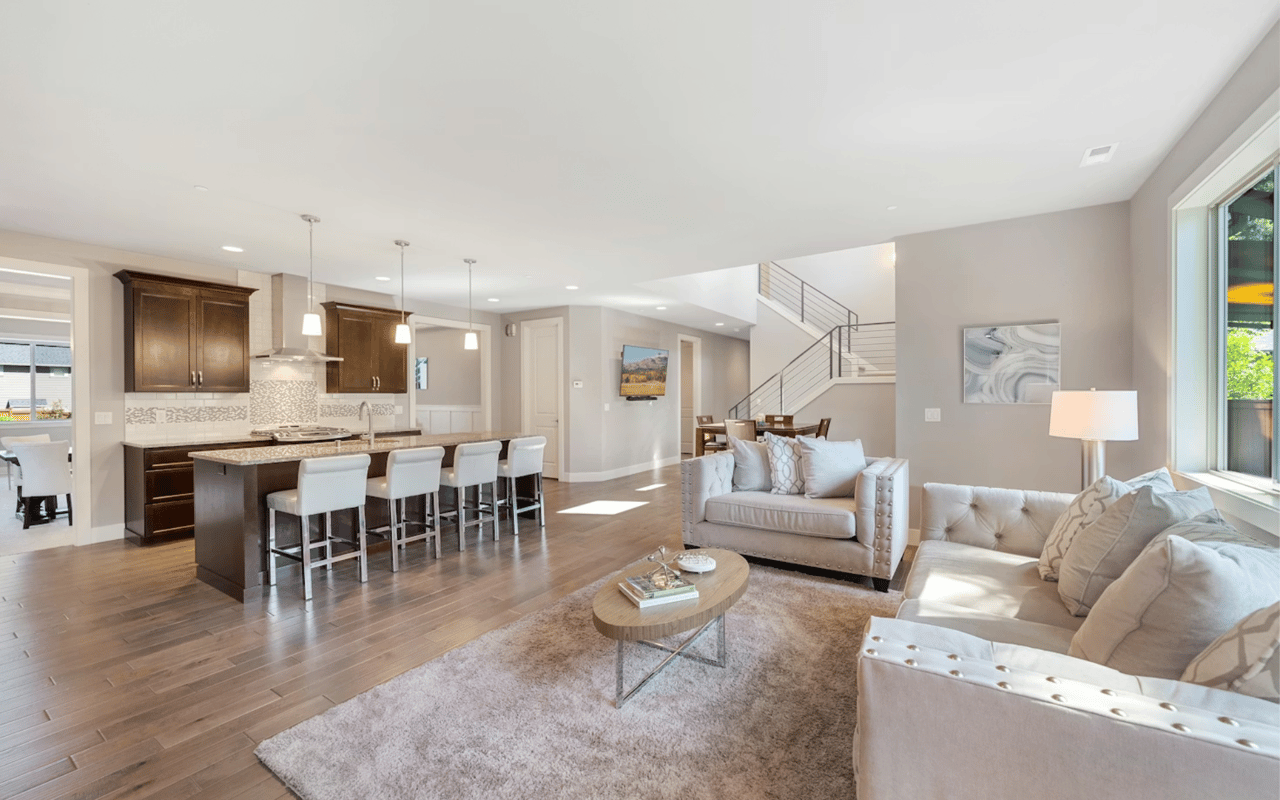
Professional staging creates emotional appeal — and part of your job at an open house is to mentally remove it and evaluate the underlying space clearly.

How to See the Home Beneath the Presentation

  • Assess room dimensions independently of the furniture — minimal furnishings can make secondary bedrooms appear more spacious than their actual square footage
  • Open every closet — their size and condition reveal both the home's true storage capacity and sometimes evidence of moisture or deferred maintenance
  • Check natural light at the time you're touring and account for how it differs at the times you'll actually be home
  • Note ceiling height, window placement, and room flow — these don't change when the staging comes out, and they determine how the home actually lives

Ask the Right Questions

An open house is an information-gathering opportunity. The listing agent is there to represent the seller, but they're required to disclose known material facts — and the questions you ask shape what you learn.

Questions Worth Asking at Every Open House

  • When will the Transfer Disclosure Statement and Natural Hazard Disclosure be available to review?
  • Are there any known permit issues or unpermitted additions?
  • How long has the home been on the market and have there been prior offers?
  • What are the average monthly utility costs?

Know Your San Mateo Neighborhood Context

Context that matters to long-term value and livability — school boundaries, traffic patterns, proximity to Caltrain — varies significantly by specific location within the city.

Neighborhood Factors to Evaluate Beyond the Property Line

  • Walk the immediate blocks to assess street traffic, parking, and the condition of neighboring properties
  • Note proximity to the Caltrain line — several San Mateo neighborhoods sit within earshot of crossings, which affects both noise levels and commute convenience
  • Check San Mateo-Foster City School District attendance boundaries if schools matter — a home's specific address determines assignment, not just its general neighborhood
  • Visit at a different time of day if you're seriously interested — a quiet Saturday morning may not reflect a Tuesday evening

FAQs: What to Look for in San Mateo Open Houses

Should I bring anything to a San Mateo open house?

A notepad or phone for photos and notes, your written wish list for consistent evaluation across properties, and a measuring tape if you have specific furniture to place.

How do I spot a surface-level flip?

Cosmetic renovation combined with original systems is the most common signal — new countertops and fresh paint alongside an aging electrical panel or older plumbing. Ask directly whether permits were pulled for any recent work.

What disclosure documents should I request after an open house?

At minimum: the Transfer Disclosure Statement, Natural Hazard Disclosure, any available inspection reports, and the permit history from San Mateo County. These often reveal more than an hour of observation.

You Don't Have to Navigate This Alone

I've been a licensed real estate agent on the Peninsula since 1991, born and raised right here in the Bay Area. That means I bring genuine local knowledge to every open house conversation — the kind that goes beyond any checklist. My clients trust me to listen carefully, tell them the truth, and negotiate steadily through every complexity a California transaction involves. When you're ready to get serious about San Mateo, I'd love to be your guide.

Connect with 
Stephanie Nash today.


Stephanie Nash

Stephanie Nash

About The Author

For more than three decades, Stephanie Nash has been one of the Peninsula’s most trusted and proven real estate advisors, serving Woodside, Portola Valley, Atherton, Redwood City, Emerald Hills, San Carlos, Half Moon Bay, and the surrounding communities from Burlingame to Los Gatos.

Born and raised on the Peninsula, Stephanie brings true insider knowledge of the region; its micro-neighborhoods, school corridors, country-property enclaves, and the lifestyle features that make this area so coveted: sunny weather, an easygoing spirit, hiking trails, large-parcel retreats, ocean-view hillsides, and world-class food and culture.

A career built on experience, ethics, and results

Stephanie began her real estate career in 1987 working in local title companies before becoming the assistant to a top-producing agent. She earned her real estate license in 1991, and since then has built a reputation as a solutions-driven, ethical, and steady negotiator who guides clients through every complexity of a California transaction.

Her track record includes everything from luxury estates to rural acreage to trust and estate sales, including the successful sale of a 500-acre property, a transaction requiring extensive due diligence, jurisdictional navigation, and long-term strategy.

Nationally recognized performance

Stephanie has been recognized multiple times by RealTrends as one of the “Best Agents in America,” most recently in 2024; an honor reserved for the top tier of agents nationwide based on verified production.

Expert Witness in Real Estate Matters

In addition to client representation, Stephanie now serves as a retained Expert Witness in California real estate cases—including valuation disputes, fiduciary sales, marketing standards, agent performance, disclosure practices, and industry-standard care.

What clients rely on her for

Whether you are buying, selling, downsizing, expanding, or handling a trust/estate sale, Stephanie offers:

  • Deep regional expertise across multiple Peninsula micro-markets

  • Strong negotiation skills grounded in fairness, strategy, and consistent communication

  • Experience in complex transactions (trusts, estates, multiple-heir negotiations, title defects, rural land issues)

  • Compassionate guidance rooted in decades of hands-on client service

  • Unmatched availability and responsiveness

Clients praise her listening skills, honesty, and ability to navigate even the most emotional or complicated sale with clarity and professionalism.

A life built around community and care

Stephanie is deeply grateful for her family, her life on the Peninsula, and the meaningful relationships formed through her work. 

Work With Stephanie

Stephanie respects residential real estate’s dual role as a personal investment and chief financial one. Whether you are buying or selling a home, it will likely be one of the largest financial decisions you make. Stephanie will be with you every step of the way to expertly guide you.

Let's Connect